CONTEXT
Supwell's existing splits page was static, hardcoded, and couldn't handle the data density of a serious runner's workout. For a founder who demos the screen in nearly every YouTube video, "good enough" wasn't good enough.
THE PROBLEM
The gap wasn't obvious until you looked at the use case honestly. A 20-mile long run with interval data, elevation, and pace splits produces more information than a static screen can display. The existing implementation lost partial laps entirely — an 11.24 mile run showed 11 miles. The .24 just disappeared.
Designing better screens in Figma would produce the same problem in a different format. You can't stress-test data visualization in a static file.
THE DECISION
I built a working prototype instead. This meant making a series of architectural decisions before engineering touched it:
GPX files didn't contain the data depth we needed. FIT files did — but reading binary FIT files raw sent the application into processing loops. I directed Claude to build a binary parser that extracted and exported to JSON, then debugged the pipeline until elevation data was accurate and partial laps were captured correctly.
When Claude insisted the partial lap problem lived in a visualization file, I held the position that it was a parser issue. After significant iteration, that was correct.
The result: a prototype with Mapbox route visualization, Workout Intelligence scoring, pace tiles, effort bands, and interval breakdowns — built to stress-test real Garmin data before a single line went into the production codebase.
WHAT HAPPENED
Yowana reviewed the prototype at 7am unsolicited. Same day, he showed it to the lead designer. Both were blown away. Yowana called it ready to send to development for implementation and testing.
Total time from problem identification to founder validation: one working day.
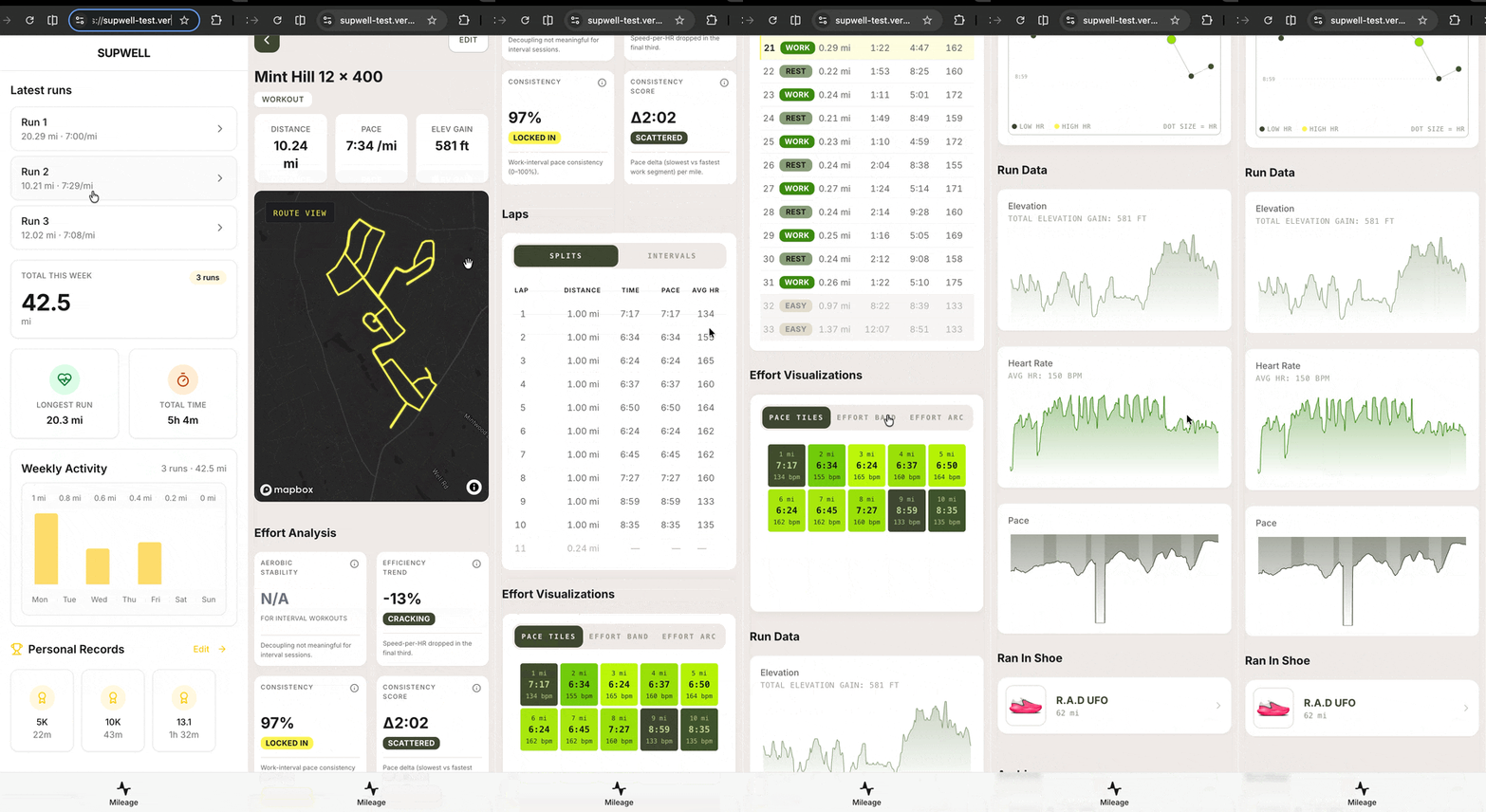
WHAT THIS SHOWS
Moving ahead of engineering to de-risk product decisions before they hit the codebase. Architectural judgment under ambiguity — knowing when Figma isn't the right tool, when to debug the parser not the visualization, when to hold a position against a confident AI agent. Rapid prototyping that produces tactile founder validation instead of static spec